Reading Your Horse's Body Language: Signs of Bit Discomfort and Comfort
Reading Your Horse's Body Language: Signs of Bit Discomfort and Comfort
Your horse can't tell you the bit is pinching, pressing on the tongue, or sitting too low. But they tell you anyway, through the mouth, ears, eyes, head and tail. Learning to read those signals is one of the most useful skills a rider can have, because it helps you catch discomfort early, before it turns into resistance, "bad behaviour", or a sore mouth.
This guide covers the body language that matters most around the bit: the signs of discomfort, the signs of a relaxed and happy horse, and what to check, in what order, when something looks wrong.
Your horse communicates with its whole body: watch the ears, eyes, head and neck, mouth and tail together.
First, rule out pain. Many of the signs below can come from sharp teeth, a sore back, a poorly fitting saddle or lameness, not just the bit. If a sign is new, persistent or getting worse, have your vet or equine dentist check your horse before you change equipment.
How to read your horse's body language
A single swish of the tail or flick of the ear means very little on its own. What matters is the pattern:
Know their normal. Every horse has quirks. Watch your horse relaxed in the field or stable so you know what "calm" looks like for them.
Look for clusters. One sign can be a coincidence. Several at once, such as pinned ears, a gaping mouth and a swishing tail, is a message.
Notice when it happens. Does it start when you put the bridle on, when you pick up contact, only on one rein, or only in downward transitions? The timing tells you where to look.
Watch for repetition. Vets use the Ridden Horse Pain Ethogram, a checklist of 24 behaviours developed by Dr Sue Dyson. Seeing 8 or more of them during about 10 minutes of riding is likely to mean the horse is in musculoskeletal pain.
Signs your horse is uncomfortable with the bit
Three signs riders often miss: flat ears, tail swishing and head shaking.
Mouth gaping
A horse that opens its mouth against the contact is usually trying to escape pressure. Occasional gaping in a hard moment is common; constant gaping is a sign the bit, the fit, or the rider's hands aren't working for that horse. Check the bit's width and height first, then consider the mouthpiece: a horse with a fleshy tongue or low palate often goes better in a shape that gives the tongue more room, such as a low port or mullen mouth.
A tongue hanging out of the side of the mouth, or drawn back and over the bit, is one of the clearest signs of tongue pressure. It often points to a mouthpiece that is too thick for the mouth, sitting too low, or pressing down on the tongue. It's worth checking before it becomes a habit.
Head tossing and head shaking
Throwing the head up, or shaking it, when you take up contact is a common protest against bit pressure or heavy hands. If the shaking happens even without a rider, or seems triggered by sunlight or wind, tell your vet: headshaking is also a medical condition involving the facial nerve, and it has nothing to do with the bit.
Ears pinned back
Ears pressed flat against the neck signal discomfort, irritation or pain. On the Horse Grimace Scale, a pain-scoring tool vets use, stiffly backward ears come together with tension above the eye, tight chewing muscles and a strained mouth and nostrils. Don't confuse this with ears that flick back briefly toward you: that's a horse listening to its rider.
Wide eyes and showing the white
A wide eye with the white showing, tension above the eye, or a fixed, hard stare usually means worry or pain. A relaxed horse has a soft eye with a relaxed upper lid. If the wide eye appears when you bridle up or pick up contact, the bit or the bridle fit is a good place to look.
Tail swishing
Flies aside, a tail that swishes hard or constantly under saddle, especially in transitions or when the rider uses the leg or rein, is one of the most reliable signs of discomfort. A horse carrying its tail to one side, or clamped down, is worth noting too.
Grinding teeth, fussing and leaning
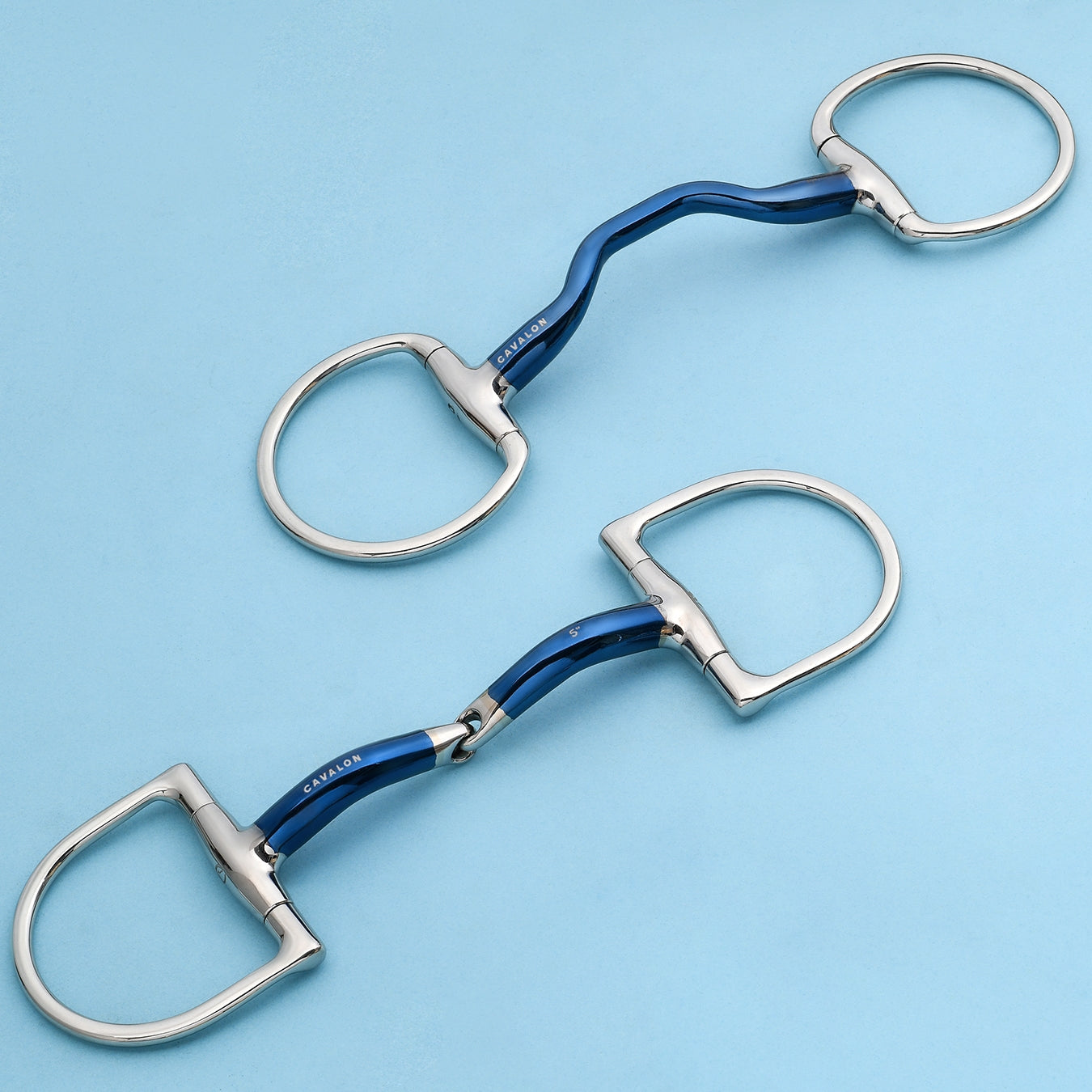
Grinding the teeth, constantly mouthing or chomping at the bit, leaning heavily on the hand, or curling behind the vertical to avoid the contact are all ways a horse tries to get away from pressure it doesn't like. A pinching loose ring, a bit that slides through the mouth, or a joint that knocks the palate can all cause them. A fixed cheek such as an eggbutt or D-ring can help a horse that dislikes a moving bit. Our bit cheekpieces guide explains how each cheek style feels.
Resisting the bridle or guarding the head
A horse that was always easy to bridle but now raises its head, clamps its teeth or pulls away is telling you something has changed. The cause can be dental pain, a sore jaw joint (TMJ), an ear problem, or a bit that has become uncomfortable. The same goes for a horse that suddenly objects to the saddle. Sudden changes in a familiar routine should always be checked by a vet.
Turning away or spooking
Turning the head, or swinging the shoulder away from where you're asking to go, can be a sign of worry about something ahead, or a sign the horse is avoiding a rein aid that hurts. If it happens mostly on one rein, check for one-sided mouth pain, a bit that's too narrow, or uneven teeth.
Signs your horse is relaxed and comfortable
Body language isn't only about problems. These signs tell you a horse is comfortable in its bit and happy in its work:
A soft eye with relaxed lids, blinking normally.
Mobile, relaxed ears that drift to the side at rest or flick back to listen to you.
A quiet mouth that is closed or softly mouthing the bit, with a little moisture at the lips. A completely dry mouth and a mouth full of froth can both mean tension.
A soft lower lip, sometimes slightly drooping when the horse is very relaxed.
A swinging tail that moves in rhythm with the stride.
A long, relaxed neck and even breathing, sometimes with a big snort or sigh as the horse lets go of tension.
What about horses "smiling"? A horse that stretches its upper lip or wiggles it while you scratch an itchy spot is enjoying the scratch. The dramatic curled-back upper lip, called the flehmen response, isn't a smile at all: the horse is processing a smell.
Licking and chewing
Licking and chewing usually shows a horse letting go of tension after a stressful moment.
Licking and chewing is often read as a sign of "submission" or of a horse thinking. Research tells a different story. In a 2018 study of feral horses, researchers Margrete Lie and Ruth Newberry found that horses licked and chewed after a tense situation had passed, likely as the mouth moved from stress-dry back to normal salivation. So licking and chewing is a good sign that tension is easing, but it also tells you that the moment before was stressful for your horse.
Quick reference: what the sign may mean and what to check
Sign
What it may mean
What to check
Mouth gaping
Escaping bit pressure
Bit width and height, your contact, mouthpiece shape
Tongue out or over the bit
Tongue pressure
Mouthpiece thickness, bit sitting too low, tongue relief
Head tossing
Protest at contact, or a medical issue
Hands and contact; vet if it happens without a rider
Ears pinned
Pain or irritation
Other grimace signs; vet, saddle and bit fit
Wide eye, white showing
Fear, worry or pain
When it starts: bridling, contact, surroundings
Constant tail swishing
Discomfort under saddle
Saddle, back, lameness, then bit
Grinding, fussing, leaning
Avoiding bit action
Pinching, a sliding bit, a joint hitting the palate
Resisting the bridle
Dental, jaw or ear pain
Vet or equine dentist first
What to do when you spot the signs
Rule out pain. Book a dental check (most horses need one every 6 to 12 months) and ask your vet to look at the back, feet and soundness if the signs continue.
Check the fit. The bit should show about a quarter inch (6mm) each side of the mouth, and sit high enough to make one or two soft wrinkles at the corners of the lips. A bit that is too wide slides and knocks; one that is too narrow pinches.
Check your hands. Ask a trainer or a friend with a camera to watch you ride. Unsteady or heavy hands cause many of the signs above, whatever bit you use.
Then look at the bit itself. Once pain and fit are ruled out, a different mouthpiece or cheekpiece can make a real difference. A horse that fusses with a moving bit may settle in a fixed cheek. A horse that shows tongue pressure may prefer a low port. A horse that is dry-mouthed and tense may accept sweet iron, which many horses salivate to readily.
Change one thing at a time and give your horse a week or two to adjust, so you know what actually helped.
Not sure where to start? Cavalon's Bit Quiz asks about your horse and how they go, and suggests a style and size. Every Cavalon bit comes with a lifetime warranty.
Look for a cluster of signs that appear when you pick up contact: a gaping mouth, tongue out or over the bit, head tossing, pinned ears, grinding teeth and a swishing tail. If several appear together, rule out dental or other pain with your vet, then check the bit's fit and style.
What does it mean when a horse opens its mouth while riding?
It usually means the horse is trying to relieve pressure from the bit. The cause can be a bit that is the wrong size or shape, heavy or unsteady hands, or pain in the mouth. Occasional gaping is common; constant gaping is worth investigating.
Is licking and chewing a good sign?
Mostly, yes. Research suggests horses lick and chew as tension eases after a stressful moment. It shows your horse is relaxing, but it also means the moment before was stressful for them.
What does it mean when a horse pins its ears back?
Ears pressed flat back usually signal pain, irritation or annoyance. A brief flick back toward the rider is different: that's your horse listening to you.
What are signs of a relaxed horse under saddle?
A soft eye, relaxed and mobile ears, a quiet mouth with a little moisture, a soft lower lip, a tail swinging in rhythm, and a long neck with even breathing.
Can the wrong bit cause behaviour problems?
Yes. A bit that pinches, presses hard on the tongue or knocks the palate can cause head tossing, fussing, leaning and resistance. But the same behaviours can come from teeth, back or saddle pain, so rule those out before blaming the bit.
Every horse is different, and you know yours best. If you'd like help working out what your horse is telling you, get in touch. We're always happy to talk bits.